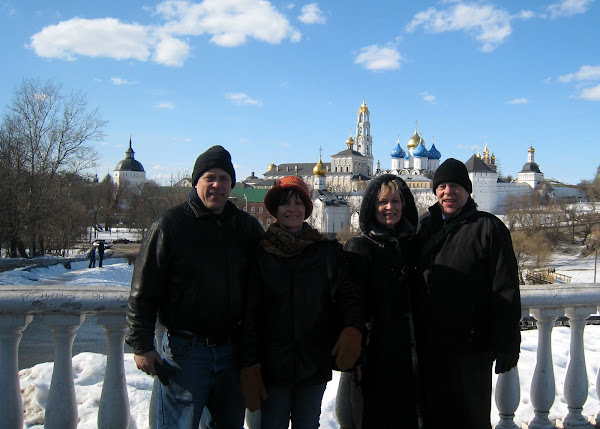


On our second visa renewal trip to Madrid, we took a sightseeing trip by train to Segovia on November 4th. It was a fast train and only took about 30 minutes to travel the 54 miles from Madrid. Clark & Renee Mason were also in Madrid to renew their visas, and they went with us.
 "Bullet" train to Segovia.
Renee & Clark and Narene
There are three major attractions to see on a visit to Segovia - the 2000 year-old aqueduct built by the Romans, the 15th-century Cathedral, and the Alcazar (Castle).
 A view of the aqueduct,
the most famous symbol of Segovia.
It has 166 total arches (43 are double tiered),
ranging in height from 23 feet to 96 ft.
 Aqueduct is 895 yards long and conveys water
from the Fuenfria River 11 miles away
to the upper town and the Alcazar.
 Where the aqueduct enters Segovia, it is an
underground channel capable of transporting
up to 30 liters a second.
 The double-tiered arches (photo from web).
The free-standing last kilometer contains
20,000 granite blocks held together
without any mortar or binding material.


 Segovia Cathedral with over 20 chapels,
begun in 1525 and completed in 1768.
It is located in the main square of the city,
the Plaza Mayor.
 Narene walking in the Cathedral cloister.
 Notice the size of the columns.
The cloister encircles the Cathedral, and
chapels and altars line the walls.
 The main altar in the Cathedral
is made of marble, jasper, and bronze
and constructed in 1768.
 A side altar in Segovia Cathedral.
 Life-size figures in this alcove in Segovia Cathedral.
 Stained glass windows, massive columns,
and vaulted ceilings.
 Another chapel in the Cathedral.
 This cloister predates the Cathedral,
having been transported stone by stone
from the original cathedral.
 The Cathedral's inner courtyard.
 The Cathedral was built at the highest point
of the town and has three entrances.

Entrance gate to the Alcazar area.
The next series of photos are taken in this area.
 There always is a monument.
The next series of photos are taken in this area.
 There always is a monument.
 Narene & Renee with the
Alcazar (castle) in the background.
 The Alcazar was the inspiration for the
castle at Disneyland.
 We did an audio tour of the Alcazar.
Originally built as a fortress, the Alcazar has served as a palace, a state prison, a Royal Artillery College, and a military academy since then. Part of the moat can be seen in the photo above.
 The Outer Hall
 The Throne Room
 The Galley Room, which gets its name from the shape
of the ceiling being like an inverted hull of a ship.
 Stained glass window in the Alcazar.
 Another stained glass window.
 The Pine-Cone Room gets its name from the
shapes in the ceiling resembling pine cones.
 Mural of Queen Isabella the Catholic
being proclaimed Queen of Castille.
 A cabinet and walls draped with fabric.
 The Royal Bedroom
The walnut bed is covered with a canopy woven
with gold. The walls are decorated with tapestries
painted with scenes of court life.
 The Room of the Monarchs
The frieze bordering the room has figures of all
the monarchs of Asturias, Castile, and Leon.
 The Room of the Monarchs
(A closer look at the frieze of kings and queens.)
 A view through a window in the
Room of Monarchs.
 The Cord Room
It gets its name from the Franciscan cord that surrounds it, which according to legend was placed there by Alfonso X "the Wise" as a sign of penance for his excessive pride. The walls are decorated with tapestries.
 The Chapel
 The Armory
 A 16th century hunting crossbow with inlaid work.
 An impressive cannon ball.
(Narene)
 A press for minting coins
dating from the 18th century.
 Sam in the Old Castle Room.
 The Museum of the Royal Artillery School
(The school dates from 1762 to 1862.)
 The cellar dates back to Roman times, as the
Alcazar is built over an old Roman fortress.
This is the oldest remaining part of the Alcazar.
 This is the top of the Alcazar in the square part
of the castle. We got to the top by climbing
182 narrow winding stairs in the
Tower of Juan II.
We're looking at the Jewish cemetery.
 Looking out over the top of the Alcazar.
 Narene & Sam at the top of the Tower of Juan II.
 A panoramic view from the top of the tower.
 Zooming in on the Bell Tower in this view.
 View of the countryside from the tower.
 Another view from the tower.
 Looking down into the moat at the Alcazar.
 Walking down the hill from the Alcazar.
 Renee, Narene, & Clark by the old city wall.
 Another part of the old city wall.
 An arch in the old Jewish section.
 Another archway.
 The outer city wall.
 A view of Segovia with snow on the
mountains in the distance.
 One of the main narrow streets in Segovia.
 A street in the Jewish section.
 The old building at the left shows its age.
 Narene by Juan Bravo monument.
 Church of San Martin with the
Juan Bravo monument to the right.
 Narene & Sam by the Church of San Martin.
 We also went inside this church.
 Inside the church in the photo above.
 Church of San Andres
 Narene by an old wooden door.
 This is a cafe we passed by and eventually
ate at a cafeteria closer to the aqueduct.
 The Chapel
The ceremony of veiling during Philip II and Anna of Austria's nuptial Mass was celebrated here. A fire in 1862 destroyed the roofs of the Alcazar and badly damaged the framework. The building was slowly restored in 1882, but there are still traces of black from the fire to be seen in the doorway in the chapel.
 The Armory
 A 16th century hunting crossbow with inlaid work.
 An impressive cannon ball.
(Narene)
 A press for minting coins
dating from the 18th century.
 Sam in the Old Castle Room.
The suit of armor is from the 15th century.
 The Museum of the Royal Artillery School
(The school dates from 1762 to 1862.)
 The cellar dates back to Roman times, as the
Alcazar is built over an old Roman fortress.
This is the oldest remaining part of the Alcazar.
 This is the top of the Alcazar in the square part
of the castle. We got to the top by climbing
182 narrow winding stairs in the
Tower of Juan II.
We're looking at the Jewish cemetery.
 Looking out over the top of the Alcazar.

 A panoramic view from the top of the tower.
 Zooming in on the Bell Tower in this view.
 View of the countryside from the tower.
 Another view from the tower.
 Looking down into the moat at the Alcazar.
 Walking down the hill from the Alcazar.
 Renee, Narene, & Clark by the old city wall.
 Another part of the old city wall.
 An arch in the old Jewish section.
 Another archway.
 The outer city wall.
 A view of Segovia with snow on the
mountains in the distance.
 One of the main narrow streets in Segovia.
 A street in the Jewish section.
 The old building at the left shows its age.
 Narene by Juan Bravo monument.
 Church of San Martin with the
Juan Bravo monument to the right.
 Narene & Sam by the Church of San Martin.
 We also went inside this church.
 Inside the church in the photo above.
 Church of San Andres
 Narene by an old wooden door.
 This is a cafe we passed by and eventually
ate at a cafeteria closer to the aqueduct.
The featured dish of Segovia is suckling pig, but none of us had that. We needed to get back on the train soon, so we ordered something that wouldn't take too long. I had a Spanish omelette sandwich which had potatoes and cheese and was good. Sam had an egg, ham, and cheese sandwich.
 The buildings often had texture.
 Another interesting texture on the building.
 I liked the color of this building.
 President & Sister Collins
 The buildings often had texture.
 Another interesting texture on the building.
 I liked the color of this building.
 President & Sister Collins
Before the train left Madrid, we discovered President & Sister Collins were also going to Segovia on the same train. They, too, were in Madrid to renew their visas. They thought they might have to leave early to return to Madrid to take their passports to the Embassy, so they went on their own in Segovia; but we visited with them both going and returning on the train.
 We were surprised to see how fast the train
was really going when we noticed this sign
on our return trip from Segovia to Madrid.
 We were surprised to see how fast the train
was really going when we noticed this sign
on our return trip from Segovia to Madrid.